With RiskTools, impairments are easier to track, communicate, and more convenient.
Replace spreadsheets, email chains, and phone trees with a purpose-built impairment management platform that keeps everyone informed and your compliance record flawless.
What is a Fire Protection Impairment?
A fire protection impairment is any condition where fire protection equipment — such as sprinkler systems, fire pumps, standpipes, fire alarms, or suppression systems — is out of service, degraded, or non-functional for any reason.
Impairments can be planned (for maintenance, construction, or testing) or unplanned (due to damage, leaks, or equipment failure). Either way, they create a window of elevated risk that must be carefully managed.
Proper impairment management means notifying the right stakeholders (risk managers, insurers, fire departments), implementing compensatory measures, and restoring protection as quickly as possible — all while maintaining a documented audit trail.
Planned Impairments
Scheduled maintenance, system upgrades, or construction work that requires temporarily disabling fire protection equipment.
Emergency Impairments
Unexpected equipment failures, pipe breaks, or damage that immediately takes fire protection systems offline without advance notice.
NFPA 25 Compliance
RiskTools helps you meet NFPA 25 requirements for impairment coordinator responsibilities, notifications, and documentation.
Practical fire protection impairment guidance in one place.
Use these RiskTools resources to understand impairments, build a policy, choose precautions, and answer common edge-case questions.
What is a Fire Protection Impairment?
Understand what an impairment is, why it matters, and how elevated risk should be managed.
Read resourceEstablishing an Impairment Management Policy
Key considerations for building a written impairment policy and notification workflow.
Read resourcePrecautions During a Fire Protection Impairment
Common precautions to consider while fire protection is impaired.
Read resourceImpairment Tracking Comparison
Compare impairment tracking approaches and see where RiskTools fits.
Read resourceFrequently asked questions about impairments
Answers to common questions and guidance for unique situations.
01How long does an impairment need to be before a permit and reporting is necessary?
A fire protection system is considered impaired if it is rendered inoperable for any length of time. Your site policy should specify when an impairment needs to be reported. It is not the intent to capture very short-duration activities where protection is promptly restored to service (e.g. lubricating valve stems, exercising valves, or checking tamper switches). It is considered best practice to use the full impairment procedure any time an impaired device is left unattended, even if it is only for a few minutes. The system must be used for any impairment that spans a shift change, to ensure awareness for the incoming shift.
02Is fire pump maintenance an impairment?
Yes, normal fire pump inspection and maintenance activities such as changing engine or gear oils and oil filters require taking the fire pump offline. If a fire occurred during the maintenance activity, the engine could not be immediately started. Thus, an impairment permit should be used even if the job is constantly attended.
03Do dry pipe sprinkler flushing investigations constitute an impairment?
An impairment is not created when the system is tripped and left wet, as it can still respond to a fire. However, an impairment is normally necessary when the sprinkler valve is closed to install hose connections and to reset the system after the obstruction investigation is complete.
04How should dry pipe sprinkler system accelerators be managed?
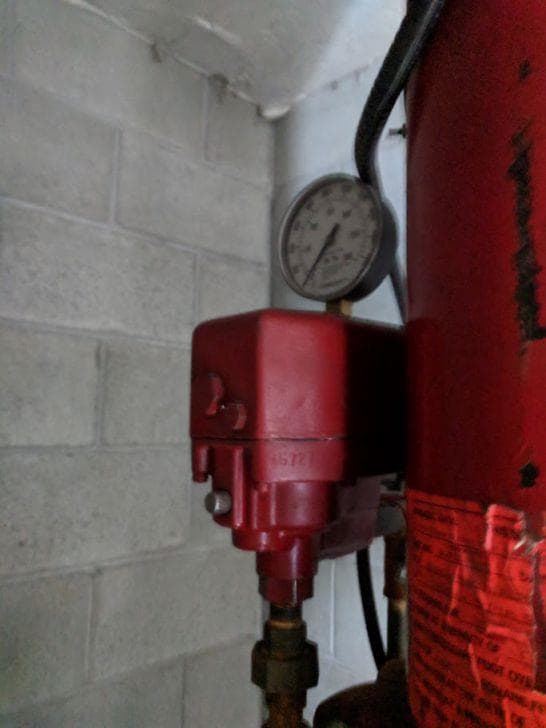
If an accelerator for a dry sprinkler system is isolated for any reason, an impairment should be logged. Even though the sprinkler system can be left in service and will still operate, water delivery to the fire will be delayed. In significant fires, this can impact the system's ability to control the fire. An impairment permit should be used to ensure the issue is documented and that the accelerator is correctly returned to service. Simply note on the impairment permit that the Dry Sprinkler System remains in service.
05What about Fire Alarm Systems?
Your site impairment policy should specify whether fire alarm devices such as smoke and heat detectors should be managed with an impairment permit. Many insurers do not require impairments to these devices to be reported, because they do not affect automatic systems that physically combat the fire.
However, special care must be taken for fire alarm devices that are interlocked to protection systems, such as smoke or heat detectors that actuate pre-action sprinkler systems in server rooms or deluge sprinkler systems. These devices must be managed with an impairment permit.
Some locations choose to manage all fire alarm devices with impairment permits to avoid confusion. The site Impairment Policy should document the approach your organization has chosen.
06What about the Public Water Supply?
Sites that rely on a public water supply for fire protection must be vigilant to disruptions in the supply. A water main break or planned shut down for work can impair fire protection systems on site, even in the absence of any action by site staff or closure of any valves on site. This situation consequently represents a significant fire protection impairment and should be managed and reported accordingly.
07Do fire extinguishers qualify as a redundant protection system?
No. Checking fire extinguishers and providing extra extinguishers is a good precaution for any impairment, but only a fully automatic protection system qualifies as "redundant." Systems that rely on manual operation such as fire extinguishers and hoses are considered a good precaution, but not a redundant protection system.
08What other special systems should an impairment policy consider?
Some sites have special protection systems that should also be managed with an Impairment Permit. Examples include clean agent systems for servers and electrical rooms, CO2 systems for fryers or machinery enclosures, spark suppression systems on combustible dust collectors, water mist systems, and foam systems - including foam tanks and bladders.
Locations with an on-site water reservoir or water tank should also use the impairment policy if the reservoir or tank is drained below the minimum fire reserve for cleaning, inspection, or maintenance.
Impacts on Safety and Reliability
The data is clear: properly maintained and monitored fire protection systems save lives and property.
Records of more than two deaths where sprinkler systems operated as intended
Fewer civilian deaths in properties with sprinklers vs. without
Lower property losses per fire in sprinklered vs. unsprinklered properties
Of sprinkler system failures attributed to systems being shut off at the time of the fire
Source: National Fire Protection Association (NFPA)
Effortless Compliance
Every impairment report, notification, and resolution is automatically logged and timestamped in RiskTools. When your insurer, broker, or regulator asks for documentation, you can produce a complete audit trail in seconds — not hours.
Our platform is designed to align with NFPA 25, FM Global, and insurance carrier requirements for impairment notification and management. Stop worrying about compliance and focus on resolving impairments faster.
Start Your Free TrialKey Strengths of Risktools Fire Protection Impairment Management
Everything RiskTools is built around comes back to one idea: make loss control fast, simple, and hard to drop.
Purpose-built impairment workflow
Report, classify, track, escalate, and close impairments automatically.
Reminders before, not just after
Pre-due notices plus escalating overdue alerts.
Priority-aware notifications
Filter notices so critical impairments surface first.
Client self-administration
Manage your own users, locations, and business units.
Multi-insurer ready
Built for brokers, lead insurers, and subscribing markets.
Full multi-language support
Site staff read and respond in their local language.
Data export
Pull your impairment data for offline analysis any time.
Mobile-friendly and intuitive
Tooltip guidance, training videos, and a reference manual.
Onboarding included
Setup, rollout, and client or sponsor branding for every client.
Built to improve
A focused team shipping new capability and acting on feedback.
Get a quote for your impairment program
Contact us with a few details about your portfolio and impairment workflow. We'll turn around a quote within 24 hours.
Contact UsStay in the loop
Get product updates, industry insights, and loss control best practices delivered to your inbox.