Risk Resources
Establishing an Impairment Management Policy
Key considerations when implementing a fire protection impairment management policy at your facility.
Establishing an Impairment Management Program
Fire Protection Impairments must be carefully managed to mitigate the associated risk. Each facility should have a written policy that identifies a person responsible for implementing and overseeing the impairment management program. The policy should also:
- require each impairment to be authorized by an appropriate individual
- identify who can authorize an impairment
- require that a permit be used to document each impairment, and that it should identify:
- what system is being impaired
- what it protects
- when the impairment is expected to start and end
- what precautions are in place for the duration of the impairment
Additionally, the policy should identify which stakeholders need to be notified and how this will happen. Examples are internal resources such as the site Emergency Response Team (ERT), management, and/or maintenance staff responsible for fire protection. External stakeholders would include the public Fire Department and Insurance Companies.
Planned Impairments
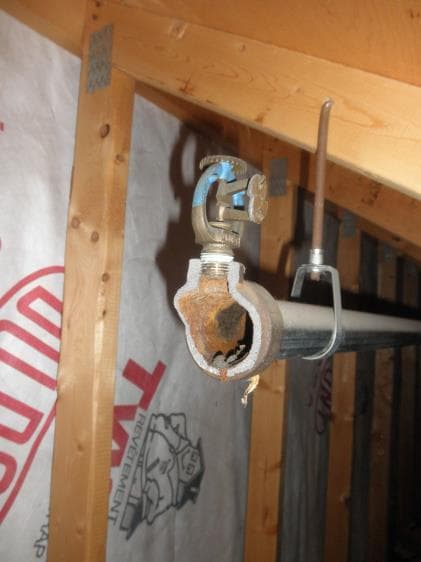
Planned Impairments are situations where fire protection is taken out of service for work that can be planned in advance (e.g., relocating sprinkler heads or replacing a fire pump). Planned impairments should involve consultation with affected parties before the work begins, including the Safety Department, Emergency Response Team, maintenance, and operations. Consultation should include a risk assessment and planning for the precautions that will be implemented during the impairment.
Steps should be taken to minimize both the size of impaired area and the duration of the impairment. For example, it may be possible to install plugs on a handful of sprinkler lines and return the remainder of the system to service, or to install a cap on a cross-main and restore sprinkler protection to half of a sprinkler system while work is completed on the other portion.
For duration, the work should be expedited to minimize the duration of the impairment. Pre-stage tools and materials as much as possible before taking the system offline. If more than one day of work is required, then the system should be returned to service each night if possible.
Unplanned Impairments
Some impairments may arise unexpectedly or be discovered through routine inspections. Examples include a water main break that interrupts the water supply to a site, freezing of sprinkler lines during cold weather, or isolation of a sprinkler system after it has helped control a real fire. In these cases, priority should be placed on notifying affected parties and restoring the system as quickly as possible.
When unplanned impairments occur, take care to ensure that scope of the impairment is fully understood. Additionally, take time to consider whether effective temporary measures can be put in place while repair work is underway. For example, it may be possible to bring a water truck on site while an underground main is repaired.
Notifying Other Parties
The Fire Protection Impairment Policy should identify parties that need to be notified of an impairment. Examples include:
- site management, maintenance, and operations staff
- corporate risk management
- insurance underwriters and brokers
- the public fire department
The RiskTools.AI system can ensure that these parties are all notified automatically when a Fire Protection Impairment permit is issued.
Restoring Protection After an Impairment
For impairments involving water-based fire protection, a 2-inch drain (main drain) test should be conducted after protection is restored to ensure water flow and pressure are returned to normal. Any valves that were closed during the impairment should be re-opened and locked in the open position according to the site's valve locking policy. Reset the alarm system and notify the monitoring company, if applicable. Finally, external stakeholders that were notified of the impairment are also informed of the restoration.
The impairment permit should be completed and kept on file to document the work history and demonstrate compliance with the Fire Protection Impairment program.
Manage impairment policy workflows in RiskTools.
Use the portal to authorize impairments, document precautions, notify stakeholders, and confirm restoration.